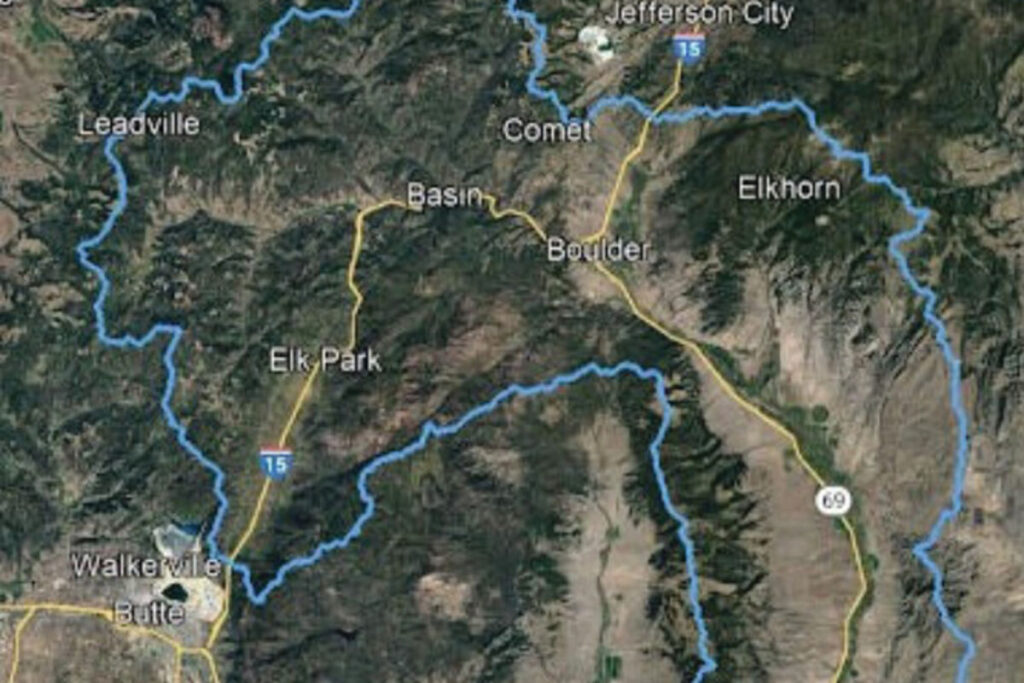
Work is underway to develop a Watershed Restoration Plan (WRP) for the Boulder River watershed, an effort led by the Jefferson River Watershed Council (JRWC) in partnership with local landowners. This marks an important step toward addressing water quality and quantity concerns in the Boulder River while addressing the health of tributaries throughout the drainage.
The Boulder Watershed is home to various agricultural operations, historical mining areas, rural residences, and important fish and wildlife habitat. In recent years, community members have expressed growing concerns about streambank erosion, elevated summer water temperatures, declining flows, and the lingering effects of past land use. The WRP aims to bring these observations together with technical analysis to establish a clear path for future restoration. Rather than focusing on a single issue, the WRP will gather input across the full range of watershed needs. JRWC and its partners will assess water quality and quantity data, identify priority reaches for restoration, evaluate opportunities for riparian enhancement, and coordinate with the local water users on strategies that improve overall resilience.
“The Boulder WRP will partner with landowners to help establish a framework to improve the quality and quantity of available water resources, benefitting water users by improving the health of the Boulder River,” said Tom Harrington, Jefferson River Watershed Council’s Board Chair.
Local knowledge is central to this process. Landowners and residents have a firsthand understanding of how conditions have changed over time. Their participation ensures that the final plan reflects the watershed’s needs and supports both private land stewardship and long-term resource health. JRWC hosted two public planning meetings on September 16th and November 6th in Whitehall to gather input from landowners.
The plan will also help the community pursue state and federal funding for watershed improvements. Watershed Restoration Plans are a key requirement for many programs, including the Montana Department of Environmental Quality (DEQ) 319 non-point source pollution program, the Montana Department of Natural Resources and Conservation (DNRC) grant programs, and fisheries-focused funding sources, allowing proposed projects to move forward more efficiently. Having a locally supported WRP enables Montana communities to compete for funding they rely on. It strengthens the ability to address issues that have been difficult to tackle without a coordinated approach.
Plan Development – Jefferson River Watershed Council will:
Compile and analyze available data on water quality, hydrology, habitat conditions, and land use.
Identify restoration opportunities such as riparian plantings, streambank stabilization, low-tech process-based restoration, fish passage improvements, and projects addressing legacy impacts from historical mining.
Draft watershed goals and recommended actions based on public input and technical review. A draft WRP will be shared for community feedback in December. A final draft will be submitted to DEQ in January. The final plan will provide a long-term guide for restoration, conservation, and collaborative planning across the Boulder River watershed.
For updates or to participate in the planning process, contact JRWC at jeffersonriverwc@gmail.com. All feedback and input are welcome!
Founded in 1999, the Jefferson River Watershed Council strives to improve water quality and quantity while enhancing the Upper Jefferson River’s natural resources and wildlife. Originally composed of irrigators who sought to ensure that water was plentiful and safe for all uses, JRWC now includes recreationalists, sportsmen’s groups, federal and state agencies, and other stakeholders. Ultimately, the council seeks to develop practical solutions to difficult problems that impact the Upper Jefferson River.